

Tiểu sử nghệ sĩ
Bộ sưu tập tác phẩm

Game of Dragon Snake
×
Game of Dragon Snake

Watching Lotus
×
Watching Lotus

Flower Sermon
×
Flower Sermon

Spare Bowls
×
Spare Bowls

The Remaining Eye
×
The Remaining Eye

Self-searching
×
Self-searching

Set Free
×
Set Free

Asking For Guidance
×
Asking For Guidance
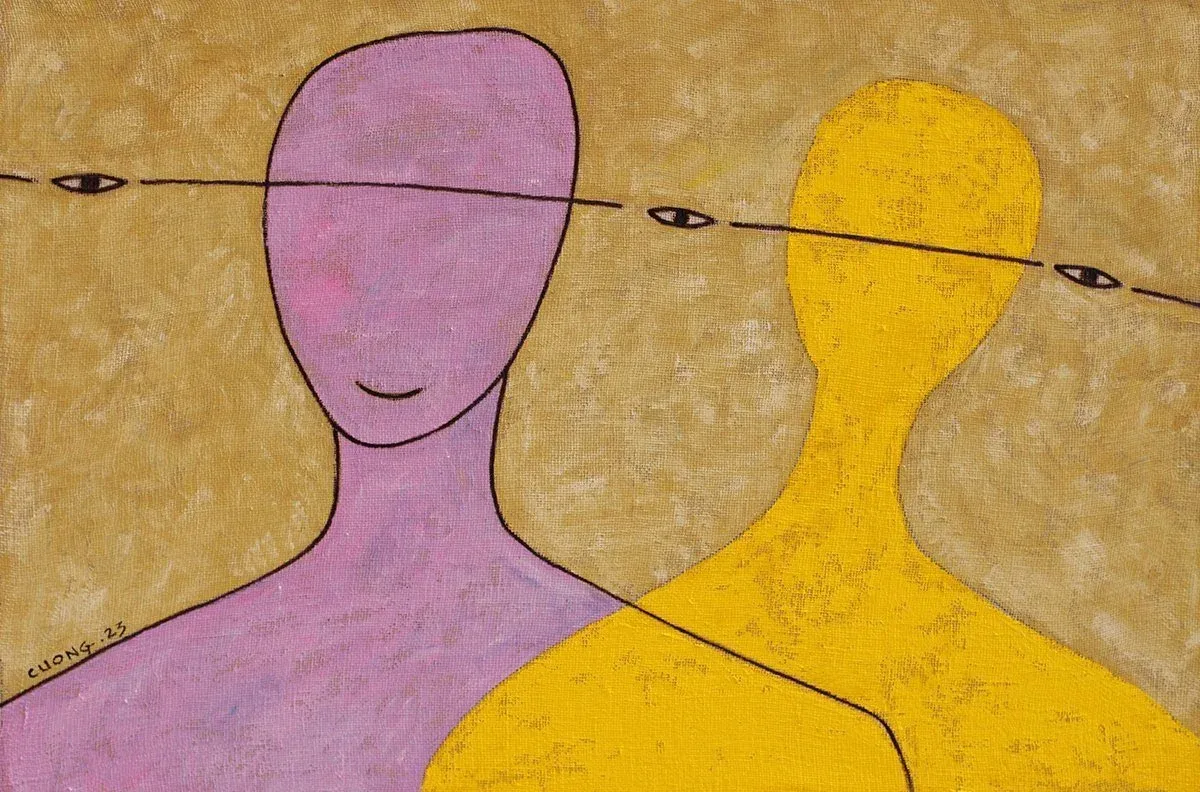
The Changing Eye
×
The Changing Eye

Love
×
Love

Spring Street
×
Spring Street

Hanoi Old Quarter
×
Hanoi Old Quarter

Raising Buffalo
×
Raising Buffalo

Rope Skipping
×
Rope Skipping

Goodness from the Heart
×
Goodness from the Heart
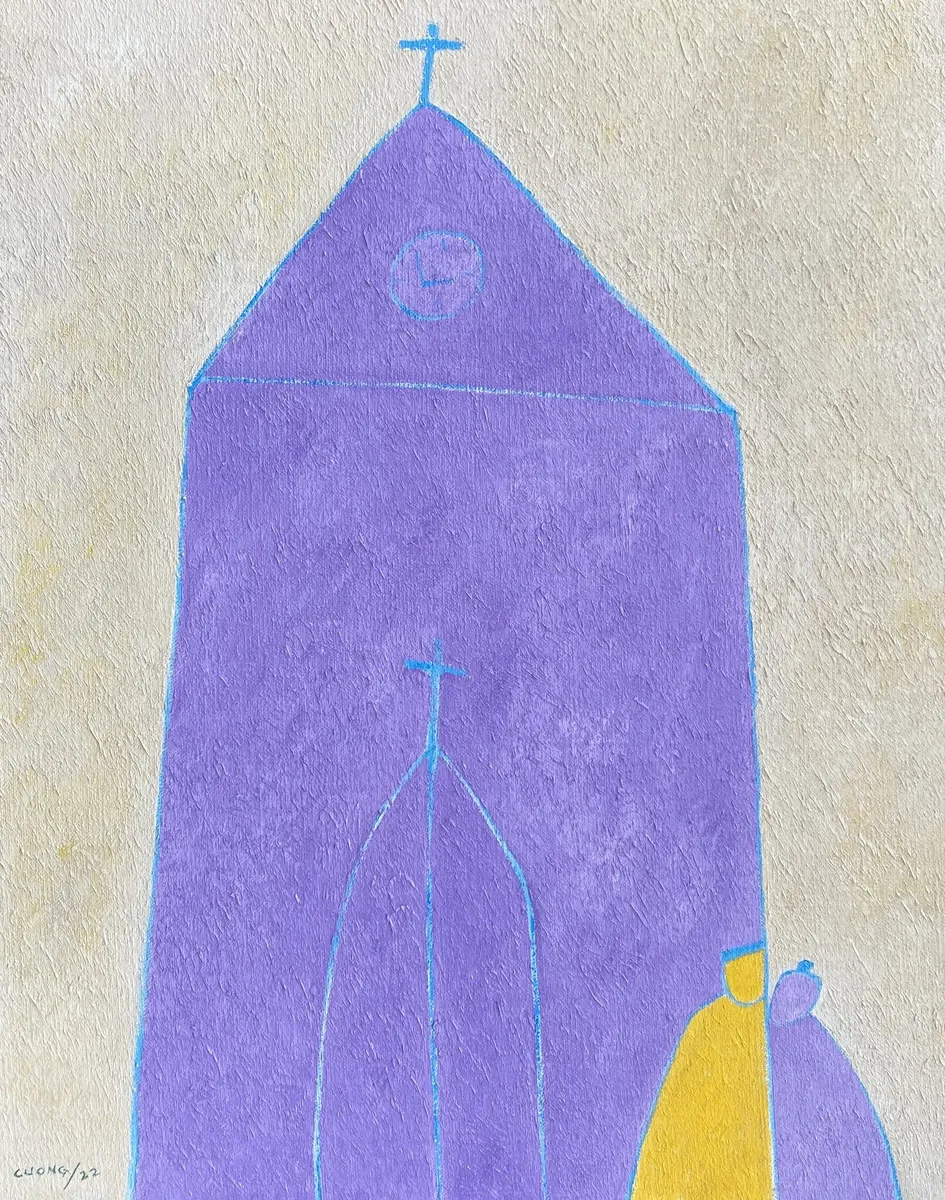
Happy Christmas
×
Happy Christmas
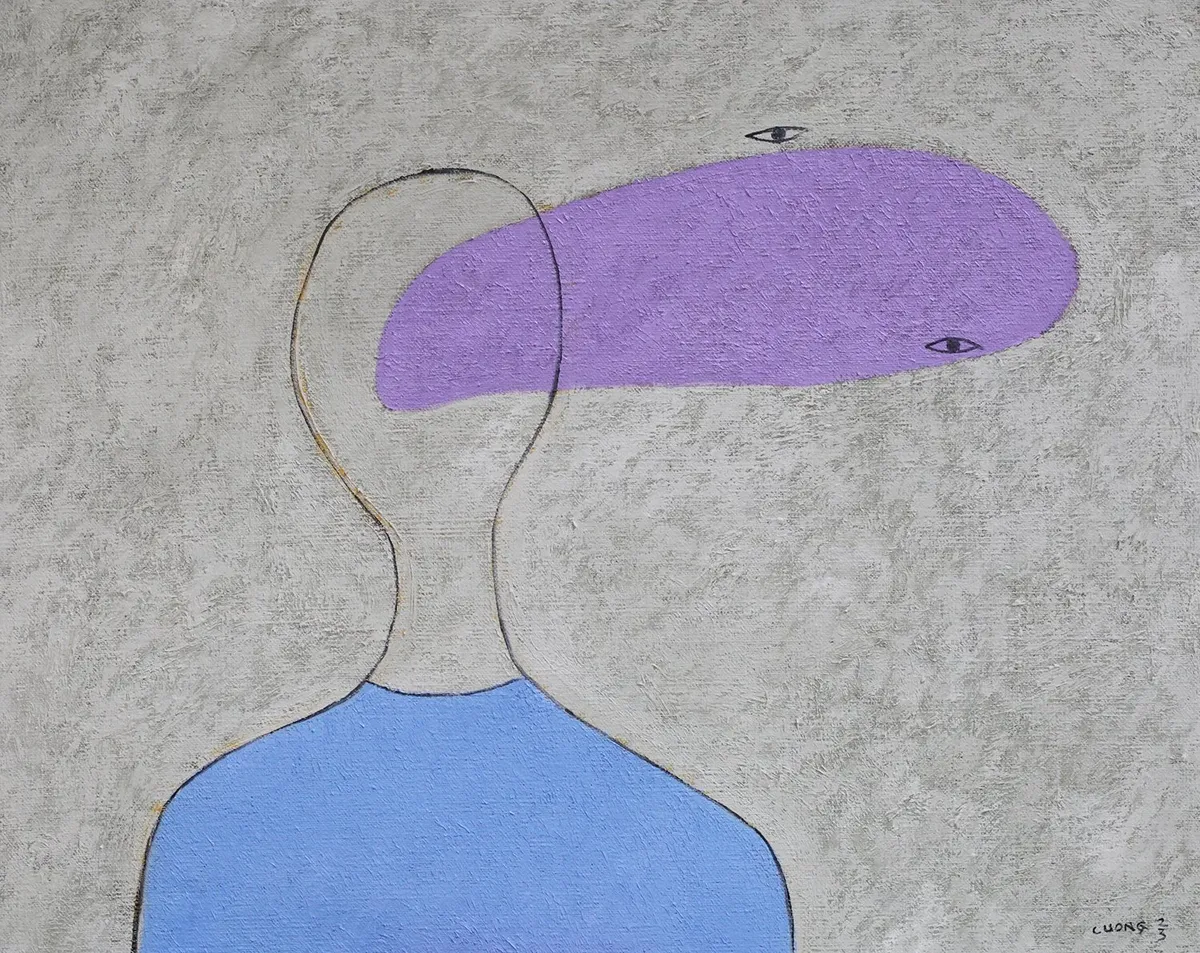
Changing Eyes
×
Changing Eyes

Winter
×
Winter

Searching
×
Searching

Old Street
×
Old Street

Friends
×
Friends

Spring Festival
×
Spring Festival

Portrait
×
Portrait
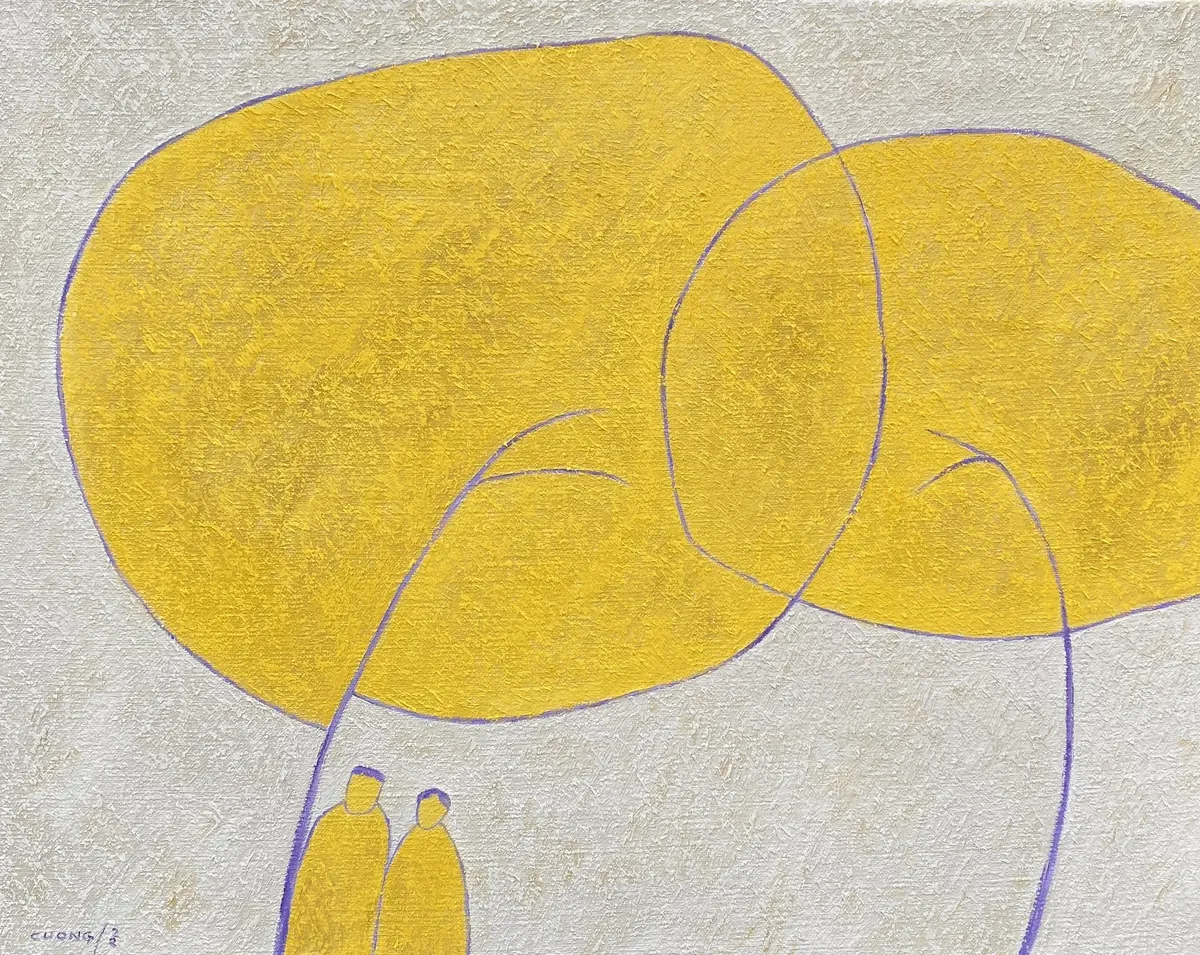
Autumn
×
Autumn
Triển lãm tiêu biểu
- Le Thiet Cuong (1962-2025) attended the Vietnam State Film School in Hanoi where he studied set design and animation, following in the profession of his parents. His early artistic talents were noted from an early age when he was evacuated to the country during the American war. He spent his days drawing and became a cartographer during his army service in the early 80´s.
- Le Thiet Cuong‘s trademark gouache on cheesecloth and paper paintings have now become iconic of their time. His style is minimalist and is inspired by Buddhist teachings and Eastern philosophies, which is apparent in his often simple compositions. However, he never loses sight of the importance of the depiction of village and country life in his paintings motivated by his early childhood experiences. Objects and food from everyday life such as rice, grains, rice bowls, and chopsticks are important motifs in his works. “Rice culture is food for the spirit”, Cuong has commented. His paintings are often stark in their simplicity yet rich and diverse in their meaning and interpretation and hold a serene power in our ever-changing cluttered world.
- Le Thiet Cuong was born in 1962 in Hanoi. He is the son of the writer – the poet Le Nguyen, and his mother is the famous filmmaker Do Phuong Thao. His solo exhibitions are held in Hong Kong, Singapore, Thailand, the United States, Korea, and many other countries. Le Thiet Cuong’s paintings are included in the collection of the National Museum Singapore, Deutsche Bank AG – Hanoi, ABN Amro Bank – Singapore. He passed away in July 2025 at his Gallery and residence in Hanoi.
- TIME Magazine, November, 2007
- NY Art Magazine, February 2006
- L’Humatite Magazine, September 2005
- Sotheby’s Singapore Catalogue, December 2003
- The Bangkok Post, October 2000 and October 2002
- Christies’ Singapore Catalogue, March 1999
- Elle, October 1997
- “Platform”: 1-70 young modern Artists from Asia and Latin America: 1997
- “Asian Art News”: November-December 1997
- The Singapore Straits Time, October 1997
- Tableau, Fine Arts Magazine Holland, September 1997
- The Art Magazine “Tate”: Spring 1997
- TIME Magazine, August 1996
- The South China Morning Post, May 1995
- Vogue, April 1995
- 2022: “The Tale of Kieu”, Thang Long Gallery, 41 Hang Gai, Hanoi.
- 2015: Seeking, Gallery 39, Hanoi
- 2014: Mosaic, included 20 ceramic/ lacquered paintings, Gallery39, Hanoi and Ly club, Sai Gon
- 2013: “13”, included 13 panorama paintings, Gallery39, Hà Noi.
- 2010: Oneself, Gallery 39, Ha Noi, Vietnam
- 2009: Peaceful, Shingendo Gallery, Tokyo, Japan.
- 2008: Lan’s Story, Thanh Binh Gallery, Hanoi, Vietnam
- 2007: Tree exhibition, Gallery 39A, Hanoi, Viet Nam.
- Like a Nil, Korean Cultural Center, Hanoi, Viet nam
- 2006: Manuscript, Gallery39, Ha Noi, Viet Nam
- 2005: Grains of rice, Gallery Dragon, Ha Noi, Viet Nam
- 2004: Inspiration from Basho’s Poem, Shingendo Gallery, Tokyo, Japan.
Trừu tượng phương Tây dưới góc nhìn của họa sĩ Việt
Chủ nghĩa trừu tượng sinh ra ở phương Tây với những cái tên như Kandinsky, Pollock, nhưng khi du nhập vào Việt Nam, nó đã mang một diện mạo hoàn toàn khác. Các họa sĩ Việt không vẽ trừu tượng như một cuộc chơi hình khối hay giải phẫu cảm xúc cá nhân thuần túy, mà thường gửi gắm vào đó những hoài niệm về làng quê, về thiên nhiên, về nỗi niềm phương Đông. Kết quả là những bức tranh hiện đại đầy chất thơ và triết lý, vừa lạ vừa quen. Nguyễn Tư Nghiêm, Trịnh Cung, Đặng Xuân Hòa là những cái tên tiêu biểu cho sự chuyển hóa này. Để chiêm ngưỡng những tác phẩm trừu tượng đương đại, bạn có thể xem ngay bộ sưu tập tại đây.